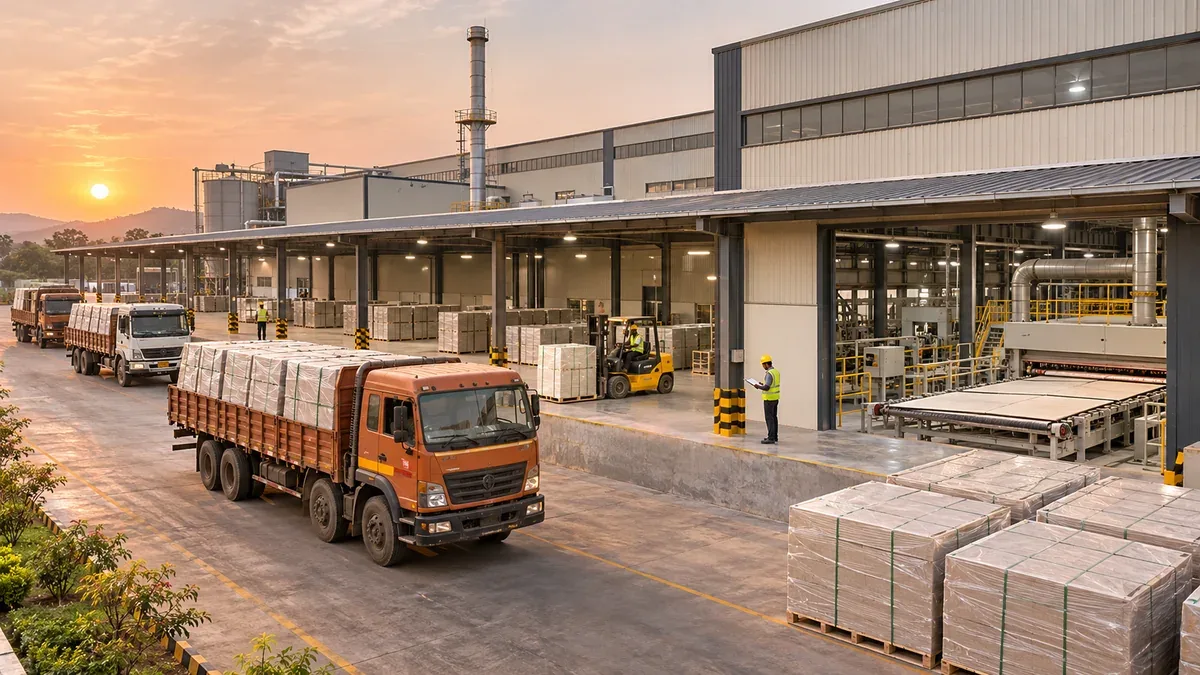
Verifying production capacity requires evidence about the product you intend to buy, not just a photograph of a factory or a headline output figure. Tile stock, work in process and a proposed production slot are different things. A buyer should establish which of those categories supports the offer and what must still happen before the material can be inspected, packed and released.
The practical question is whether identified, suitable material can be allocated to your order under the agreed conditions. Answer it by combining warehouse checks, product records and a review of the relevant production plan. This helps importers and bulk buyers detect gaps between a general capability claim and an order-specific commitment before payment, transport booking or project planning depends on that commitment.
Separate stock, unfinished material and planned production first
Ask the supplier to classify the material behind its quotation. Finished stock should be identifiable and available for an agreed allocation; work in process still needs manufacturing or approval steps; planned production depends on a future operating window. Avoid combining these categories into a single stock statement, because each carries different uncertainties and needs a different form of verification before the buyer relies on it.
Connect each proposed quantity to the product reference, finish and batch information required for the purchase. A warehouse may contain many pallets without holding enough suitable material for your specification. Ask the seller to distinguish the quantity physically present, the quantity already committed elsewhere and the quantity being offered to you. Keep any proposed reservation and its conditions in the written order record.
- Finished stock: verify identity, condition, quantity and the proposed allocation to your order.
- Work in process: identify the remaining operations, inspections and release decisions.
- Planned production: establish the product-specific operating window and the approvals that remain outstanding.
Inspect stock through a traceable sampling and counting process
Arrange a warehouse review that connects the supplier's inventory record with the physical pallets or cartons being offered. The review should confirm product identity, visible condition and the basis used to convert cartons or pieces into the quoted purchasing unit. Use a competent inspection arrangement when the order justifies it, and keep the resulting observations with the quotation and approved sample record.
Do not treat a short video call or a warehouse photograph as a complete stock audit. Images can support the review, but they may not show the whole lot, existing reservations or the condition of material inside the cartons. Ask how the inspection sample was selected and which parts of the offered quantity were actually checked. Record the limits of the review rather than silently treating uninspected material as verified.
| Inventory statement | Evidence to connect | Question still requiring an answer |
|---|---|---|
| Material is in the warehouse | Inventory record and physical lot identification | Is that lot suitable and allocated to this order? |
| Cartons are available | Count basis and carton contents | Does the purchasing-unit total reconcile? |
| Stock is ready for dispatch | Inspection release and packing condition | What approvals or documents remain outstanding? |
Request a stock response tied to your specification
Send the ORKAY Tiles desk the product requirements, intended application and destination before asking about stock. Use the contact enquiry to request an order-specific response, including the evidence needed for approval. Keep a general discussion of availability separate from a confirmed allocation so that your team does not plan around material that has not yet been committed.
Assess usable output for the proposed product and line
Production capability should be reviewed for the relevant product, format and process. Ask which operation will support the order and whether any changeover, material preparation, maintenance or approval is required. A general factory output statement may describe a different product mix or operating assumption. The buyer needs a credible explanation of the usable output behind the proposed plan, not a claim based only on installed machinery.
Review the evidence used to support that explanation, such as recent relevant production records and the way the operation accounts for stops or material that is not released as saleable product. If the supplier cannot share sensitive records directly, discuss an appropriate independent verification route. Make the evidence request proportionate to the purchase, while recognising that a polished factory presentation does not by itself establish product-specific capacity.
- Process match: confirm that the proposed line and supporting operations can handle the selected product.
- Output basis: ask whether the stated figure represents theoretical output, recent production or inspected saleable material.
- Operating dependencies: identify changeovers, approvals and other commitments that may affect the available window.
Verify the business identity without confusing it with capability
Keep the legal and operational reviews separate. A company's registration details can help establish who the business is, while a visit or production review concerns what it can supply. The Ministry of Corporate Affairs' company master-data service is relevant to registered company identity. It is not a live inventory system and should not be presented as evidence that a particular tile order has a production allocation.
Apply the same separation to shipment readiness. The IMO explains that verified gross mass is required for loading a packed container under the applicable SOLAS rules. That shipping requirement does not establish that the tiles meet the approved specification or that a vessel booking is assured. Keep identity checks, product release and transport conditions in distinct parts of the purchasing file.
Combine product documents with operational evidence
Review the available ORKAY Tiles product information, then identify the questions that a catalogue cannot answer for your order. Ask the desk which sample approvals, stock records or production-stage confirmations can be discussed for the enquiry. This creates a clearer division between information about the product range and evidence supporting the material proposed for your particular purchase.
Turn the proposed allocation into measurable release milestones
Record the events that must occur before the material is released: outstanding approvals, completion of production, inspection, packing and the agreed dispatch handover. Each milestone should have an owner and a clear meaning. If the supplier proposes a date, identify the assumptions behind it. This helps the buyer understand whether the plan depends on work already completed or decisions that remain open.
Agree how the supplier will report a change and what happens to the allocation if the buyer changes the specification or approval timing. A reservation without defined conditions can be misunderstood by both sides. Keep the revised plan with the original record, and require an appropriate approval before accepting a substitute product or a different production source in place of the material initially reviewed.
- Allocation record: identify the product, source and conditions under which the material is held for the order.
- Release record: define the inspections and approvals needed before packing or dispatch.
- Change record: document a revised milestone or substitution and the buyer authority that accepted it.
Approve a buying decision that matches the evidence collected
The result of verification should be a clear statement of what has been checked and what remains conditional. A buyer may reasonably proceed with finished stock, work in process or planned production, but the decision should reflect the different dependencies involved. Avoid giving all three categories the same confidence simply because they appear in the same quotation or are described by the same salesperson.
Retain the records so that the receiving team can compare the delivered material with the basis on which the purchase was approved. Use any discrepancy to improve the next stock or capacity review. Verification is most useful when it supports an actual allocation and release decision, rather than becoming a collection of factory photographs that cannot be connected to the product eventually shipped.
Discuss the evidence needed for your bulk-order decision
For an OEM or private-label enquiry, review ORKAY Tiles' business solutions and describe the product and operating requirements that matter to your programme. Ask the desk to identify the relevant approval steps and any conditions attached to a proposal. Confirm the order-specific stock or production arrangement before allowing a general capability discussion to become a purchasing assumption.
Questions
Frequently Asked Questions
Does a warehouse video prove that stock is available for my order?
No. A video can support an inspection, but it may not establish the product identity, total quantity, carton condition or existing reservations across the whole offered lot. Connect the physical material with an inventory record and a documented allocation. Record what the review actually covered so that uninspected or unallocated material is not silently treated as verified stock.
What is the difference between installed and usable production capacity?
Installed capacity describes equipment or an operating assumption, while usable capacity for an order depends on the relevant product, process, available window and release conditions. Ask how the supplier accounts for changeovers, maintenance, approvals and material that is not released as saleable product. The important question is how the proposed order is supported, not how impressive the general factory figure sounds.
How should cartons be converted into a quoted tile quantity?
Use the declared contents and purchasing unit for the identified product, and reconcile that basis with the physical count and order documents. Check whether the offer refers to pieces, cartons, pallets or area, because an unexplained conversion can create a shortage or misunderstanding. Keep the calculation and its source data in the purchasing file instead of relying on an informal total.
Can company registration information verify production capability?
No. Registration information helps identify a business and should be considered separately from factory capability, inventory and order allocation. A company record is not a live production report. Connect the proposed product with the relevant operation through suitable evidence, such as a visit, an independently arranged review or product-specific records, and document any limits on what could actually be checked.
What should an order-specific allocation record contain?
It should identify the product, source, offered material or production window, and the conditions under which that allocation is maintained. Record outstanding buyer approvals and the events needed for release. Ask who may change the allocation and how the buyer will be informed. A clear record prevents the parties from interpreting a general availability discussion as an unconditional reservation.
Should a buyer accept work in process instead of finished stock?
That depends on the purchasing requirements and the evidence available. Work in process still needs manufacturing, inspection or other release stages, so it should not be described as finished stock. Identify the remaining dependencies and assess whether the proposed plan suits the project or replenishment need. The decision should reflect those conditions rather than treating every availability category as equally certain.
Can ORKAY Tiles confirm capacity for my proposed order?
Discuss the specific product, application, destination and approval requirements with the ORKAY Tiles desk. General website information does not establish a particular production allocation or readiness date. Ask what evidence and order-specific confirmations can be provided for the enquiry, and keep unresolved assumptions separate from agreed commitments before making payment, booking transport or planning around the proposed supply.