Picking a reliable tile exporter in India is rarely decided by the first quotation. It is decided on the fourth container, when the shade has to match the one your customer already laid, the carton count has to match the packing list, and the duty rate on the invoice has to be the one your broker expected. Most sourcing guides stop at "ask for samples and check certifications." That advice is correct and almost useless, because it never tells you which certificate, which test, which name on which document, or what happens when any of them is wrong.
This guide takes the buyer's side of the table. It covers what your destination market legally expects on paper, which trade measures currently sit on Indian tile entering the United States and the European Union, how to confirm a Morbi supplier is a factory rather than a desk, how shade and calibre consistency is actually held across firings, and which clauses in your purchase order decide whether a claim is winnable. ORKAY Tiles has manufactured and exported vitrified, porcelain, ceramic and slab tiles from Morbi since 1996 to more than 40 countries, and the checks below are the ones that separate suppliers who can repeat an order from suppliers who got lucky once.
What Reliability Actually Means on Your Second and Third Container
Reliability in tile export is repeatability, and it shows up in exactly four places: shade and batch, calibre and flatness, paperwork accuracy, and date-keeping. A supplier who gets all four right on a trial order and two of them right on a repeat order has not given you a quality problem — they have given you a planning problem, because you cannot sell from stock you cannot reorder. Judge candidates on their ability to reproduce, not on their ability to impress once.
The failure usually has a structural cause rather than a technical one. A desk that aggregates production from several unrelated factories can fill a first container beautifully by cherry-picking available stock, then fill the second from a different kiln with a different glaze batch. You see one vein pattern, one gloss level, one thickness on arrival, and a visibly different one three months later, with no retained sample at the factory to argue against. That is why ownership of the line matters more than the photographs in the catalogue.
Why the Second Container Is the Real Test of a Supplier
Ask any candidate a specific question: if you reorder the same design code in six months, which production record identifies the firing your first order came from, and can material be reserved from a single firing for a project quantity? A supplier with real process control answers with a batch or lot reference and a retained signed sample. A supplier without it answers with reassurance. ORKAY Tiles states its own position plainly on the company and manufacturing page — the shade you approved should be the shade in the second container and the tenth — and runs five named quality gates from pre-production control to pre-shipment release.
Which Destination-Market Standards Your Tiles Must Actually Meet
Your market sets the paperwork, not your supplier. For the European Union, ceramic tiles are covered by EN 14411, the standard that defines the terms, requirements and marking criteria for ceramic tiles and groups dry-pressed tiles as BI, BIIa, BIIb and BIII according to water absorption (https://www.boutique.afnor.org/en-gb/standard/nf-en-14411/ceramic-tiles-definitions-classification-characteristics-and-marking/fa103321/61106). For Australia and New Zealand, slip resistance is classified under AS/NZS 4586, where P ratings from P0 to P5 come from the wet pendulum test and P4 to P5 are the classifications intended for wet or higher-risk areas (https://treadwellgroup.co.nz/as-nzs-4586-slip-ratings-in-new-zealand-walkways/).
The practical consequence is that "ISO certified" on a supplier's homepage proves nothing about the tile you are buying. A management-system certificate describes how the company runs; a test report describes how the product performed. What you need is a report that names the standard, names the test, names the product code, and carries a date close enough to your production to be meaningful — plus, for EU entry, a declaration of performance that your importer can hand to an enforcement officer. ORKAY Tiles lists CE and ISO 9001 among its certifications and invites buyers to check the certificates directly, and rates its matt and anti-skid bodies to AS/NZS 4586.
Before you shortlist, map your own market against what you will be asked to produce at the border and on site. The table below is the version worth putting in front of a supplier during the first call.
| Destination | What you will be asked to produce | What it actually proves | What to request from the exporter |
|---|---|---|---|
| European Union / EEA | CE marking and a declaration of performance referencing EN 14411 | That declared characteristics were determined under the harmonised standard and the factory runs production control | The DoP itself, with your product codes on it, not a certificate number quoted in an email |
| Australia and New Zealand | Slip resistance classification to AS/NZS 4586 | Wet pendulum (P) or oil-wet ramp (R) performance for the specific surface finish | The test report for the exact finish and size, since classifications are not interchangeable between finishes |
| United States | Test data behind the spec, plus correct AD/CVD declaration at entry | Technical suitability and the duty treatment your broker will apply | Producer and exporter names exactly as they will appear on the invoice and certificate of origin |
| Any wet-area or outdoor project | Water absorption group and slip classification for the installed location | Whether the body and finish suit frost, standing water or foot traffic in that area | Reports matched to the application, not a general company brochure |
Read that table as a sequencing tool. If a supplier cannot produce the right-hand column for the ranges you want, the quotation is premature — you are pricing material you may not be able to sell or install legally. Suppliers who specify by location rather than by product code make this easier; ORKAY Tiles organises its range by where the tile has to live, including bathroom and wet-area tiles with matched wall and floor designs.
Get the conformity question answered before you price the container. Tell the ORKAY export desk your market, the sizes you sell and the volume you plan, and ask which ranges already carry the test evidence your market requires. The desk in Morbi answers within one business day. Send your requirement to the export desk.
How to Verify a Tile Manufacturer and Exporter in Morbi
Verification happens in three layers, and most buyers only do the third. Layer one is legal identity: the firm that will invoice you must exist as an exporter of record. India's DGFT common portal carries a "View Any IEC" lookup that works without a login — you enter the Importer/Exporter Code plus at least three characters of the firm name and get the registered details back (https://www.dgft.gov.in/CP/). If the IEC on the proforma invoice resolves to a different firm name than the one you have been emailing, stop and ask why before you remit anything.
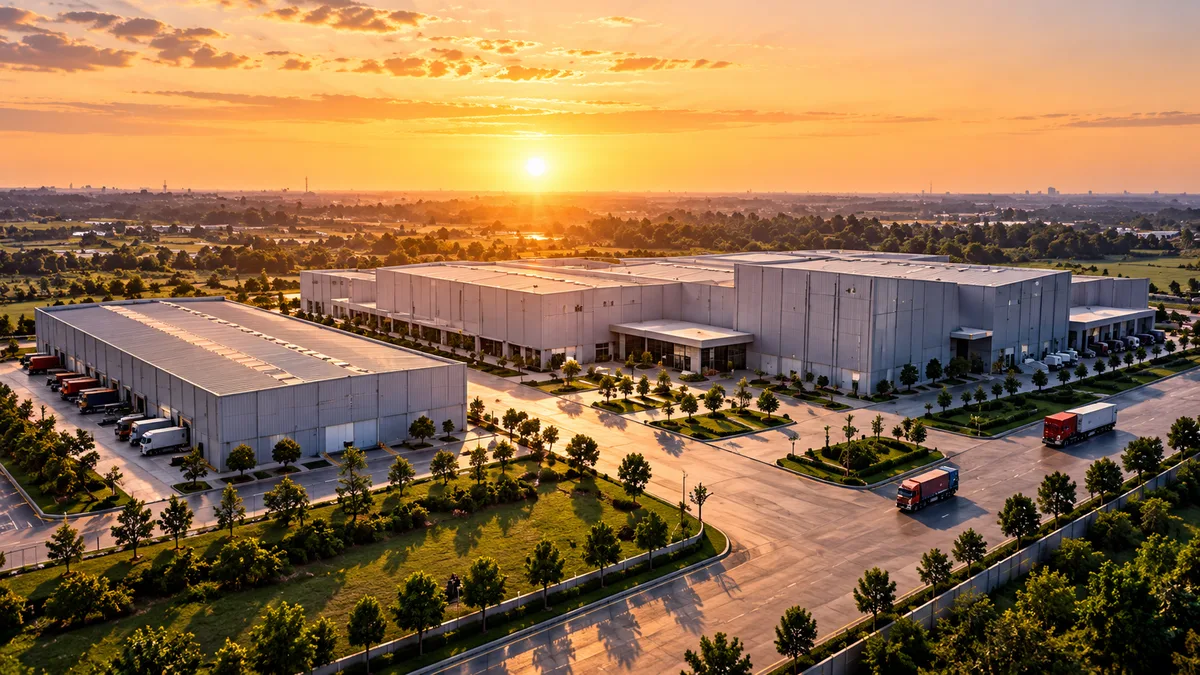
Layer two is manufacturing identity, which is where traders are exposed. Ask for a live video walk, not an edited film: the press, the glaze line, the kiln exit and the polishing line, with the size you are buying actually running. Ask who owns the kiln. Ask how many lines are active today and what the daily output is. ORKAY Tiles operates seven production units on one Morbi campus running a combined 60,000 square metres a day across four active lines, with a slab line on SACMI's CONTINUA+ system — one of only 60 to 70 units in use worldwide — and a design studio holding over 4,000 designs with full-size slab samples racked beside the lines that fire them.
- Resolve the IEC first: run the lookup on the DGFT portal and match the result letter-for-letter against the proforma invoice, because the name that clears customs is the name on that document, not the name in the signature block.
- Match the bank account to the firm: a beneficiary name that differs from the invoicing entity is the single most common fraud pattern in bulk sourcing, and it is also the hardest to unwind after remittance.
- Demand a live line walk: schedule it during Indian working hours, name the size and finish you want to see running, and ask the camera to stay on the kiln exit for a minute. Edited footage proves access, not ownership.
- Get certificates as files, not numbers: ask for the PDFs and check issuer, scope and expiry yourself. ORKAY publishes its certification and awards on the About page on exactly this basis.
- Test the desk with a hard question: ask something that requires factory data, such as pallets and weight per container for a given size. A supplier with real operations answers from published packing data; a desk goes quiet for two days.
What Current Trade Measures Do to Your Landed Cost
Duty exposure is part of supplier selection, not an afterthought for your broker. For the United States, Commerce announced its final determinations on ceramic tile from India in April 2025: the antidumping determination was negative — 0.00% for both named exporters — so the AD investigation was terminated, while the countervailing duty determination was affirmative, with 3.45% for Antiqa Minerals, 3.06% for Win-Tel Ceramic and Theos Tiles, and 3.18% for all others (https://www.trade.gov/final-determinations-antidumping-and-countervailing-duty-investigations-ceramic-tile-india). For the European Union, the Commission imposed definitive anti-dumping duties on Indian ceramic tiles ranging from 6.7% to 8.7% in February 2023, for five years (https://policy.trade.ec.europa.eu/news/eu-acts-against-dumped-ceramic-tiles-india-and-turkiye-2023-02-10_en).
Because several of these rates are company-specific, the identity of your producer and exporter changes your cost. Two quotations that look identical ex-works can land differently once a broker applies the correct rate, and an invoice naming a producer you did not expect can trigger questions you cannot answer at the port. Ask every candidate, in writing, which producer name and which exporter name will appear on the commercial invoice and certificate of origin, and confirm with your own customs broker before the order is confirmed rather than after the vessel sails.
| Market and measure | Status as determined | Rate | What it means when you choose a supplier |
|---|---|---|---|
| United States — antidumping on ceramic tile from India | Negative final determination; investigation terminated | 0.00% for both named exporters | No AD duty from that case, but entry declarations still need the correct producer and exporter details |
| United States — countervailing duty on ceramic tile from India | Affirmative final determination | 3.45%, 3.06% and 3.18% all-others | Confirm which rate your supplier falls under before you commit to a landed price |
| European Union — anti-dumping on ceramic tiles from India | Definitive measures, February 2023, five years | 6.7% to 8.7% | Build the applicable rate into the quotation comparison, not into your margin afterwards |
| European Union — anti-dumping on ceramic tiles from Türkiye | Definitive measures, same case | 4.8% to 20.9% | Useful when you are weighing Indian supply against Turkish supply for EU delivery |
There is a pricing signal worth reading alongside the duty picture. CeramicPost's compilation of India's HS 6907 export data shows April to July of FY27 at ₹4,199 crore across 100.1 million square metres — value down 33.8% and volume down 46.4% year on year, while average realisation rose 23.4% to ₹419 per square metre, with Russia, the United States, the United Kingdom, Vietnam and Poland the top five destinations (https://ceramicpost.com/india-ceramic-tile-exports-monthly-data/). When average realisation is rising, a quotation far below the market deserves more scepticism, not less, and that is the honest context for the trade-off our own guide on reliable versus cheap tile suppliers works through.
Building your own brand instead of reselling someone else's? Private label runs settle artwork, carton design and shade approval before production starts, and nothing on the pallet identifies the factory unless you want it to. Minimum quantities and lead times are quoted per range by the export desk. See how the private label and OEM programme works.
How Shade, Batch and Calibre Consistency Gets Controlled
Shade consistency is decided in the body, the glaze and the firing — not at the sorting table. By the time a tile reaches the end of the line, the shade has already happened; all the sorter can do is separate what came out. This is why asking "do you check quality?" produces a useless answer, and why asking "what do you control upstream, and at how many stages?" produces a useful one. ORKAY Tiles describes five gates: pre-production control, in-process inspection, pre-packing checks, packing and pallet verification, and pre-shipment release.
Your side of the control is the purchase order. A signed physical sample retained at the factory and a matching one retained by you converts a subjective argument into a comparison. Batch or lot identification printed on every carton lets you isolate a problem to one firing instead of writing off a container. For project quantities, a reservation from a single firing is the only way to promise a specification to an architect — ORKAY offers priority on batch holds under its dealer programme for exactly that reason.
- Signed sample reference: name the approved sample and its date in the PO, and require the factory to retain a counter-sample until the order is accepted. Without a retained reference, a shade dispute becomes an opinion contest.
- Batch and shade code on the carton: insist these are printed, not stickered, so warehouse staff can separate firings and installers can avoid mixing two tones on one floor.
- Single-firing requirement for project volumes: state it explicitly for quantities going into one continuous space, and accept a longer date in exchange rather than a split batch.
- Calibre and thickness tolerance: agree the tolerance in writing for large formats, where small calibre drift shows as lippage across a long joint and gets blamed on the installer.
- Pre-shipment photographs against the counter-sample: ask for images of loose tiles beside the retained sample under consistent light before the container is sealed, while the material is still in Morbi.
Large formats deserve particular attention because the tolerance stack is less forgiving and the freight cost of a mistake is higher. If your range includes porcelain slab tiles, settle flatness, edge condition and pallet handling before the first run, not after the first breakage claim.
Packing, Pallets and Container Planning That Survive the Voyage
Tiles are a weight-limited cargo, and the two most common claims — breakage and short count — are both decided at packing rather than at sea. Before you compare prices per square metre, ask each supplier for boxes, square metres, pallets and gross weight per container for the exact sizes you want. That single data set tells you whether your quoted freight is realistic, whether the container will hit a road weight limit at your end, and whether the supplier plans loads or improvises them. ORKAY publishes this as container packing data for wall, floor and parking tiles and porcelain slabs.
The compliance trap sits under the tiles. ISPM 15 governs wood packaging material: wood thicker than 6 mm must be debarked and then either heat treated to a core temperature of 56°C for at least 30 minutes or fumigated with methyl bromide, and must carry the IPPC mark showing the country code, the treatment provider's number and the treatment code, with over 80 countries and territories enforcing it (https://en.wikipedia.org/wiki/ISPM_15). An unmarked or wrongly marked pallet can get a container held, treated at your cost, or sent back — on cargo that was otherwise perfect.
- Confirm the IPPC mark before loading: ask for a photograph of the stamp on the actual pallets, since the mark must be legible and the treatment code visible to the inspector at your port.
- Agree carton count per pallet and pallets per container: then reconcile the packing list against the loading photographs on arrival instead of counting a dispute into existence weeks later.
- Specify strapping and corner protection: edge damage on large formats usually traces back to how the pallet was banded, not to how the ship behaved.
- Check weight against your inland limits: a legally loaded container in India can still be overweight for a truck at your destination, which turns into a de-stuffing cost nobody quoted.
- Separate mixed loads clearly: if you are combining sizes or collections, require physical separation and distinct pallet labelling so your warehouse does not have to open cartons to find out what arrived.
Port proximity is a genuine scheduling variable rather than marketing. ORKAY loads FCL in its own yard on the Morbi campus, with Mundra port about three hours away, which shortens the window between a confirmed loading date and a gate-in.
Plan the container before you plan the order. Download the catalogue and packing data, work out your own pallet and weight numbers, and bring a realistic load plan to your first negotiation. The files come back from the Morbi export desk with a person attached. Request the catalogue and packing data.
Payment Terms, Incoterms and Export Documents for Bulk Orders
Commercial structure is where a reasonable supplier and a risky one diverge most visibly. A workable first-order structure is an advance against the proforma invoice with the balance paid against scanned documents before originals are released, or a letter of credit at sight for larger values. Full payment before production with no retained sample, no batch identification and no pre-shipment inspection right is not a payment term — it is an unsecured loan to a stranger. Put the inspection right in the PO, because a right you did not reserve is a right you do not have.
On Incoterms, FOB at the Indian port keeps freight and insurance under your control and makes supplier quotations directly comparable; CIF is simpler for a first-time importer but hides the freight component inside a number you cannot benchmark. Whichever you choose, the document set has to match it. India's DGFT common portal issues certificates of origin through a paperless platform for FTA and PTA purposes (https://www.dgft.gov.in/CP/), and the origin document is often the one your customs entry turns on.
- Commercial invoice and packing list: these must agree with each other and with the physical load, because a mismatch between them is the fastest route to a customs query and a demurrage bill.
- Bill of lading: check consignee and notify party details character by character before it is issued; corrections after issue cost money and days.
- Certificate of origin: required for preferential duty claims where a trade agreement applies, and for the correct treatment of origin-specific measures.
- Test reports and declaration of performance: matched to the product codes actually shipped, which is the only version that helps you at a border or on a specified project.
- ISPM 15 evidence and loading photographs: your defence against both a phytosanitary hold and a short-count claim, and both are free to obtain before the container seals.
Ask who prepares and coordinates all of this. ORKAY's export support covers packing information, commercial documents, container planning and shipment coordination on the agreed terms, on one communication thread from enquiry through dispatch — which matters because document errors are usually coordination failures, not clerical ones.
Red Flags That Separate a Trading Desk From a Real Factory
Most bad outcomes are visible in the first two weeks of conversation if you know what you are looking at. The pattern is consistent: enthusiasm about price, vagueness about process. A supplier who will not name a production date, will not identify a batch, will not send a certificate as a file, and will not put a live camera on a running line is telling you something precise about their relationship to the kiln. Treat these as disqualifiers rather than negotiation points.
Test the flags rather than guessing at them. Ask a question whose answer requires factory data and see what comes back, how fast, and whether it is internally consistent with earlier answers. Then ask the same question again two weeks later in different words. Operations that exist produce the same numbers twice; stories do not.
- Bank details that do not match the invoicing firm: walk away rather than asking for an explanation, because every legitimate exporter can receive payment in its own registered name.
- Price that drops sharply without a specification change: something was substituted — thickness, grade, glaze or sorting class. Ask which, in writing, and compare the answer to the original offer sheet.
- "ISO certified" with no document: a certificate you cannot read is a claim, and a scope you cannot check may not cover the product or the plant you are buying from.
- No retained counter-sample offered: suppliers who expect to repeat your order want a reference on their shelf as much as you do; reluctance signals they do not expect to reproduce it.
- Reluctance to name the producer on the invoice: given company-specific duty rates in the United States and the European Union, this directly affects your landed cost and your broker's declaration.
- Dates that move without notice: one slipped date explained in advance is operations; three discovered by you is a supplier whose planning you will be absorbing for years.
If you are weighing several Morbi candidates side by side, our detailed comparison of OEM tile manufacturers on quality, pricing and shipping sets out the scoring framework in more depth.
Put a real supplier through this checklist. Send the market you serve, the sizes and finishes you sell and your expected volume, and ask for the certificates, packing data and producer details named above. One desk in Morbi handles export, domestic, private label and dealer enquiries, and replies within one business day. Start the conversation with the export desk.
Making a Supplier Decision You Can Still Defend in Five Years
The decision rule is narrower than most sourcing checklists suggest. Verify legal identity through the DGFT IEC lookup, confirm manufacturing ownership with a live line walk, obtain the conformity evidence your own market demands rather than a generic certificate, establish the duty treatment that applies to the specific producer and exporter named on your invoice, and lock shade, batch and calibre control into the purchase order instead of trusting it to goodwill. A supplier who clears all five is worth a higher price per square metre than one who clears three, because the two they miss are the ones that cost you a container.
Your next step depends on where you are. If you are still comparing, ask two or three shortlisted suppliers for the same three things — a certificate file, container packing data for one size, and the producer name that will appear on the invoice — and judge them on the answers rather than the quotations. If you already know your market and volume, skip the brochure stage: tell the ORKAY export desk the market, the sizes and the quantity, and if you are building your own label, ask the B2B and private label team which ranges fit and what the per-range minimums and lead times are.
Questions
Frequently Asked Questions
How do I confirm an Indian tile exporter is a real manufacturer and not a trader?
Work through three layers. First, resolve the Importer/Exporter Code on India's DGFT common portal using the free View Any IEC lookup, which needs the IEC plus three characters of the firm name, and match the result exactly to your proforma invoice. Second, ask for a live, unedited video walk of the press, glaze line, kiln exit and polishing line with the size you are buying actually running, and ask who owns the kiln. Third, ask a question that needs factory data, such as pallets and gross weight per container for a specific size. Factories answer from published packing data; intermediaries go quiet or send inconsistent numbers.
What duties currently apply to ceramic tile imported from India into the US and the EU?
For the United States, Commerce's April 2025 final determinations on ceramic tile from India were negative on antidumping, so that investigation was terminated at 0.00% for both named exporters, and affirmative on countervailing duty at 3.45% for Antiqa Minerals, 3.06% for Win-Tel Ceramic and Theos Tiles, and 3.18% for all others, per trade.gov. For the European Union, definitive anti-dumping duties of 6.7% to 8.7% on Indian ceramic tiles took effect in February 2023 for five years, according to the European Commission. Because some rates are company-specific, confirm the producer and exporter names on your invoice with your own customs broker before confirming the order.
Which certificates and test reports should I ask a tile exporter for?
Ask for documents matched to your market and your product codes, not a general company claim. For EU entry, that means a declaration of performance referencing EN 14411, the European standard defining terms, requirements and marking criteria for ceramic tiles. For Australia and New Zealand, it means a slip resistance classification to AS/NZS 4586 for the exact finish, since P ratings from the wet pendulum test are not interchangeable between surfaces. A management-system certificate such as ISO 9001 describes how the company operates and does not substitute for product test data. Always request the files themselves so you can check issuer, scope and expiry.
Should a first container be FOB or CIF?
FOB at the Indian port is usually the better learning choice because freight and insurance stay under your control, which makes competing supplier quotations directly comparable and stops freight from hiding inside a single number. CIF is simpler if you have no forwarder relationship yet, but you lose visibility of the freight component and some negotiating leverage. Whichever you pick, make sure the document set matches the term and that consignee and notify party details on the bill of lading are verified before issue, because post-issue corrections cost both money and days at the port.
How do I prevent shade variation between the first and second container?
Shade is set by the body, glaze and firing, so control has to be upstream and contractual. Name an approved signed sample and its date in the purchase order and require the factory to retain a counter-sample. Insist that batch or lot codes and shade codes are printed on every carton so a problem can be isolated to one firing. For quantities going into one continuous space, specify material from a single firing and accept a longer date rather than a split batch. Finally, reserve the right to pre-shipment photographs of loose tiles beside the retained sample before the container is sealed.
Do wooden pallets from India need ISPM 15 treatment?
Yes, for the large majority of destinations. ISPM 15 covers wood packaging material thicker than 6 mm, which must be debarked and then heat treated to a core temperature of 56°C for at least 30 minutes or fumigated with methyl bromide, and must carry the IPPC mark showing the country code, the treatment provider's number and the treatment code. Over 80 countries and territories enforce it. Ask for a photograph of the stamp on the actual pallets before loading, because a missing or illegible mark can mean the container is held, treated at your cost, or re-exported even when the tiles themselves are perfect.
Is a full container load better than a mixed load for a first order?
It depends on how certain you are about demand. A single-size FCL is cheaper per square metre and simpler to document, but it concentrates your risk in one design that may not match your market. A mixed load spreads the risk across sizes and collections and tells you quickly what sells, at a somewhat higher handling cost and with more scope for packing errors. If you choose a mixed load, require physical separation on the pallets and distinct labelling so your warehouse can identify material without opening cartons. ORKAY Tiles handles private label and mixed loads and loads FCL in its own Morbi yard.
Does ORKAY Tiles supply private label tiles for importers and distributors?
Yes. Under the private label programme, artwork, carton design and shade approval are settled before the production run starts, and nothing on the pallet identifies the factory unless you want it to, so the boxes arriving at your warehouse carry your own brand. Minimum quantities and lead times are quoted per range rather than as a blanket figure, so you need to ask the export desk for the specific collections and sizes you want. Export support also covers packing information, commercial documents, container planning and shipment coordination on the agreed terms.