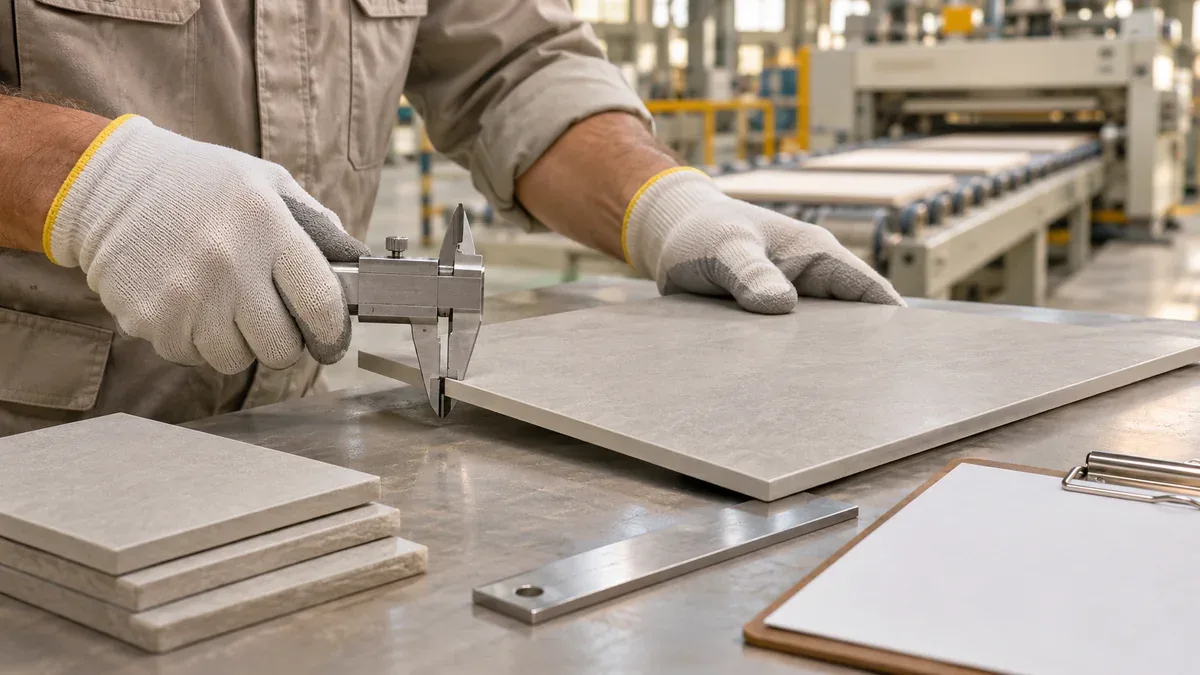
Choosing a Wholesale Tile Manufacturer in India for consistent quality starts with defining what the product must do and how the buyer will accept it. Quality is not a single catalogue adjective. A tile can satisfy one requirement while being unsuitable for another, so appearance, dimensions, relevant performance characteristics and the intended installation should be considered together before a bulk commitment is approved.
The strongest purchasing file connects those requirements to a representative sample, applicable test evidence and an inspection plan for the actual shipment. It also explains what will happen when a repeat order or production change is proposed. This approach helps buyers judge a manufacturer's process without assuming that every product in a range carries the same characteristics or that a general company certificate approves the selected material.
Write acceptance criteria around the intended installation
Describe the environment in which the tiles will be used before deciding which documents to request. A wall finish, a retail floor and an exterior paved area can involve different demands. Ask the specifier or relevant technical adviser to identify the characteristics that matter to the application. Keep those requirements in the enquiry so that the manufacturer responds to a defined use rather than an undefined request for premium quality.
Separate appearance approval from the technical decision. A buyer may like a design while still needing evidence about dimensions, surface characteristics or performance in the intended environment. Record who can approve each part of the specification and which questions remain open. This prevents a visual sample acceptance from being mistaken for a complete technical release by someone who was not involved in the original discussion.
- Application criteria: describe exposure, traffic, cleaning and installation conditions relevant to the project.
- Appearance criteria: identify the design reference and the intended character of the surface.
- Approval criteria: name the technical and commercial decision makers and the evidence each needs before release.
Read test reports as product evidence rather than decoration
A useful report identifies the tested material and the method used, allowing the buyer to judge whether it supports the proposed product. Check the reference, tested characteristic, report date and the relationship between the sample and the offered range. A document for another product or an unclear sample cannot be assumed to resolve a requirement simply because it contains a recognised laboratory name.
Use standards references precisely. ISO 10545-2 addresses dimensions and surface quality, while other characteristics need their own applicable evidence. Ask the supplier to explain which report addresses each requirement in your enquiry. Avoid treating one test result as an all-purpose quality approval or assuming that a company's process certificate demonstrates every property of the tiles it sells.
| Buyer question | Evidence to connect | What it does not establish alone |
|---|---|---|
| Does the product match the required dimensions? | Relevant dimensional evidence for the offered material | Suitability for every installation layout |
| Is the appearance acceptable? | Representative sample and recorded visual approval | Every performance characteristic |
| Can the order repeat the approved reference? | Traceability and change-control records | An unconditional promise that no variation can occur |
Ask for documents that answer the specification
Review the available ORKAY Tiles product documents and identify any gaps against your application requirements. Send the desk a list of the particular evidence needed for approval. This makes the discussion more useful than requesting an undifferentiated quality certificate, and helps your team distinguish a general range description from information relevant to the actual product under consideration.
Approve representative material before releasing the bulk order
Choose a sample review process that represents the proposed commercial product and the way it will be viewed after installation. Compare enough material to understand the intended appearance rather than relying on a single attractive piece. Record the reference used, the viewing conditions and the outcome of the review. Photographs can support that record, but they should not silently replace a physical approval where appearance is important.
Clarify which differences are part of the design and which would require further investigation. The buyer and manufacturer should understand the same acceptance basis before inspection or dispatch. Keep the approved sample available to the people who check the shipment. Without that connection, purchasing, quality control and the receiving team can each apply a different interpretation of what the original sample approval meant.
- Representative selection: ask how the submitted material relates to the proposed commercial product.
- Recorded viewing: document the reference and conditions used for the appearance decision.
- Shared interpretation: give the inspection and receiving teams access to the same approved specification and sample record.
Check the manufacturer's controls at the release stage
Ask where the manufacturer checks the requirements that matter to your order and what happens when material does not meet the agreed criteria. The answer should connect inspection, identification and release decisions rather than describing quality as a general company culture. Where an order requires independent verification, agree its scope and timing before production or dispatch so that the findings can still influence the release decision.
Management-system certification can support a separate assessment of organisational processes, but it should not be stretched beyond its stated purpose. ISO's certification guidance explains the role of external certification bodies. Review the relevant scope where such certification matters to the purchase, then keep the product approval, inspection findings and shipment identity as distinct evidence in the order file.
Make the inspection request specific to the order
Use the ORKAY Tiles contact enquiry to explain the product approval and inspection arrangements your buying process requires. Ask which checks and supporting records can be discussed for the proposed material. Keep the answers connected to your enquiry, and resolve any difference between your acceptance criteria and the supplier's proposed release process before approving the bulk purchase.
Protect repeat orders through traceability and change control
Ask how the shipment can be linked to the product reference and production records needed for a later enquiry or claim. Identification should remain useful after the cartons reach the buyer's warehouse or project. Decide what the receiving team will retain and how material will be separated if a discrepancy is found. A practical traceability arrangement supports investigation without assuming that every concern has the same cause.
Repeat orders also need a clear route for approving material changes. A different factory, product revision or substitute should not be introduced informally because it looks broadly similar to the original. Ask what notification and fresh evidence will be provided before a change is accepted. Record the buyer authority that may approve it so that the next shipment follows a controlled decision rather than a convenient assumption.
- Shipment traceability: retain the product and batch references needed to connect received material with the order.
- Exception handling: identify how questioned material will be recorded, assessed and kept separate where necessary.
- Repeat-order control: require a documented review before a material change replaces the original approval basis.
Select a manufacturer through an auditable quality decision
A sound quality decision explains why the offered product fits the application and how the shipment will be checked against the approval. It does not depend on a universal ranking of manufacturers or an undefined promise of consistency. Compare the evidence received with the requirements in your enquiry, and identify any residual uncertainty before deciding whether the proposed arrangement is appropriate for the purchase.
Review the receiving results after the first shipment and use them to improve the next specification or inspection plan. Record whether the approved references were usable, whether identification supported the receiving process and how any concern was handled. This gives wholesale buyers a repeatable basis for selecting and developing a manufacturing relationship instead of restarting the decision from a brochure or sales presentation each time.
Connect your quality process with the sourcing discussion
For a programme involving OEM or private-label supply, review ORKAY Tiles' business solutions and explain the quality approvals your organisation needs. Ask the desk to identify the relevant scope and the evidence available for the enquiry. Confirm the product, inspection and change-control arrangements in the purchasing record before treating a general capability discussion as an approved supply process.
Questions
Frequently Asked Questions
What does consistent tile quality mean for a wholesale buyer?
It means that the offered and delivered material can be assessed against an agreed product specification and approval basis. The relevant characteristics depend on the application, so consistency should not remain an undefined sales term. Record the appearance reference, technical requirements, inspection process and treatment of changes. That gives purchasing and receiving teams a common basis for making and checking the decision.
Can I rely on one test report for a whole product range?
Not automatically. Check which product was tested, which characteristic the method addresses and how the report relates to the material being offered. Ask the supplier to explain any proposed extension of the evidence across a range. A familiar laboratory name or standard reference does not remove the need to connect the tested sample with the product and intended use under consideration.
Why should appearance approval be recorded separately from technical approval?
The decisions address different questions and may require different reviewers. A physical sample can help establish an appearance preference without demonstrating every characteristic needed for the application. Keep the visual reference and technical evidence together, but record what each approval covers. This prevents a purchasing conversation about design from being treated later as a complete technical acceptance by the project or inspection team.
Does a management-system certificate prove that the tiles suit my project?
No. Such certification relates to the certified organisation and its stated scope, while suitability for the project depends on the particular product and application requirements. Review the certificate where relevant, but also obtain the product-specific evidence, sample approvals and installation information needed for the decision. Avoid using a company-level document as a substitute for the actual material assessment.
When should an independent inspection be arranged?
Arrange it early enough that its findings can affect the release decision, and agree the scope before the inspection is due. Explain the product references, acceptance criteria and records that the inspector will need. The appropriate arrangement depends on the purchase and application, but an inspection added after material has already been dispatched may have less value for preventing an unsuitable shipment.
What records help investigate a concern after delivery?
Retain the approved specification and sample reference, product and batch identification, relevant inspection findings, shipment documents and receiving observations. Record the concern clearly and keep supporting photographs or other evidence where appropriate. These records help distinguish a product issue from a handling, packing or documentation problem and allow the parties to assess the concern against the approval basis used for the purchase.
How should a manufacturer handle changes on a repeat order?
The purchasing arrangement should explain which changes need notification, fresh evidence and buyer approval before release. A substitute product or different source should not be accepted solely because it looks similar to the original sample. Record who can approve the change and how the next inspection will use the revised reference. That preserves a clear decision trail across successive orders and receiving teams.