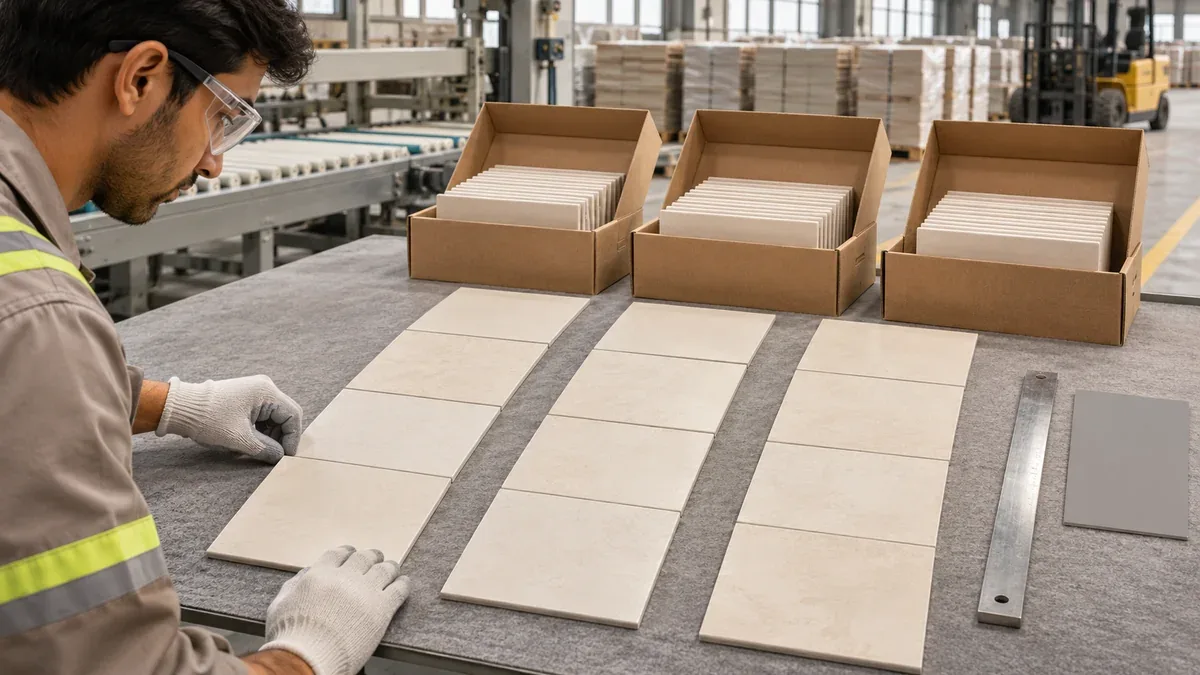
A promise of zero batch color variation should not be accepted without a precise written scope and evidence for the proposed product and project. No Indian manufacturer is identified here as providing a verified, unconditional guarantee of identical colour across every production batch and large commercial installation. The practical buying decision is to define the appearance required and establish how the offered material will be assessed against it.
That distinction matters because a design's intentional variation, a production-run difference and the appearance of an installed floor are not the same question. Lighting, layout and the reference used for approval can affect how the result is judged. For a commercial project, involve the appropriate designer or technical adviser and turn a vague zero-variation expectation into an approval process the supplier and project team can actually follow.
Ask what the proposed zero-variation promise actually covers
Request the exact wording of any proposed commitment before relying on it. Identify the product, material allocation, project area and assessment conditions to which it applies. Ask whether the discussion concerns selected material from one identified supply or a future repeat order. Without that scope, a broad phrase such as uniform colour can leave the buyer and manufacturer with very different expectations about the material being promised.
Do not infer a guarantee from a catalogue photograph, a sample board or a description of factory equipment. Those may support a discussion, but they do not explain the acceptance method or the remedy if the material is questioned. Have material contractual wording reviewed appropriately for the transaction, and keep the technical approval distinct from the commercial terms under which a claim would be assessed.
- Product scope: identify the exact material and any proposed allocation behind the commitment.
- Assessment scope: specify the reference, viewing conditions and decision maker.
- Commercial scope: clarify the conditions and remedy actually proposed rather than relying on an informal guarantee phrase.
Distinguish intentional design character from a production difference
Some tile designs are intended to have visible differences between pieces, while a project may instead require a restrained, more uniform surface. Review representative material to understand the design selected. A buyer who approves one attractive piece may not have approved the wider appearance of the product. Record the accepted visual range and make sure the project team understands what the sample review demonstrated.
Production-run differences need a separate discussion. Crossville's manufacturer guidance acknowledges that different runs can vary in size or shade. This does not establish the performance of any other brand, but it illustrates why a general promise should not replace product-specific approval. Ask the proposed supplier how the selected material and any later supply will be compared with the agreed project reference.
| Question | Evidence needed | Assumption to avoid |
|---|---|---|
| Is the design intentionally varied? | Representative product selection and visual approval | One sample represents every piece |
| Does the proposed supply match the approval? | Identified material reviewed against the project reference | A shared design name establishes interchangeability |
| What happens on a later order? | A defined fresh approval or comparison process | Future production is automatically identical |
Describe the project appearance before discussing the supplier
Use the ORKAY Tiles contact enquiry to explain the commercial project, selected product character and the appearance approval your team requires. Ask which material and supporting information can be discussed for that enquiry. Keep any proposed scope explicit, and do not interpret a general capability response as an unconditional promise of zero variation across the project.
Use measurement methods only within their applicable scope
Where an objective colour comparison is important, ask the technical adviser to identify an appropriate method and acceptance basis for the product. ISO 10545-16 addresses instrument measurement of small colour differences in plain-coloured ceramic tiles intended to be uniform. That scope matters: a reference to a colour-measurement standard should not be stretched into a universal rule for every patterned or textured design.
Do not invent a single numerical acceptance limit for every project or treat a method reference as evidence that the offered material passed a test. Agree the reference material, relevant conditions and interpretation with the appropriate parties. Keep the report connected to the proposed product and record what it can demonstrate. Instrumental evidence and a representative project mockup may answer different parts of the appearance decision.
- Method suitability: confirm that the selected assessment method applies to the actual tile design.
- Reference suitability: identify the material against which the proposed supply will be compared.
- Result suitability: distinguish a method description from a report and an agreed acceptance decision.
Approve the surface under conditions relevant to the project
A commercial-project appearance approval should consider how the selected material will be seen in the intended setting. Agree an appropriate mockup or dry-layout review with the project team, including the reference used and the viewing conditions. The purpose is to reveal whether the proposed appearance is acceptable before the material is distributed or installed across an area that is difficult to change later.
Keep the record understandable to the people making later decisions. Identify who accepted the mockup, which material it represented and which issues remained open. If the project changes the lighting, layout or proposed material, ask whether another review is needed. An approval made for one clearly defined arrangement should not silently become acceptance of every later design or supply change.
Request documents that support the actual appearance decision
Review the available ORKAY Tiles product information and identify the questions that still require samples or an order-specific response. Ask the desk to clarify the proposed product and approval route for your enquiry. Keep catalogue information, sample observations and any measurement evidence in separate parts of the file so that each is used for the decision it actually supports.
Control allocation, replenishment and the receiving review
Ask how the material approved for the project will be identified through packing, dispatch and receipt. If several allocations or deliveries are involved, decide how the project team will compare them before installation. Maintain the relevant references so that a visual concern can be investigated without relying on memory or a photograph that was never intended to be the final approval basis.
Discuss future replenishment and replacement needs before assuming that another order will reproduce the same appearance automatically. Record the process for checking later material and the authority required before it is accepted. If a difference is noticed at receipt, keep the material identifiable while the appropriate review is arranged. The project gains more useful control from this process than from a broad guarantee that nobody has defined.
- Allocation control: connect approved material with the references used in shipment and receiving records.
- Later-supply control: agree how replenishment or replacement material will be compared before acceptance.
- Concern control: preserve identification and involve the appropriate project authority when an appearance difference is questioned.
Replace an undefined guarantee with an enforceable project decision
The buying decision should explain the appearance required, the evidence reviewed and the scope of any commitment the supplier has actually accepted. That is more useful than naming a manufacturer on an unverified zero-variation claim. Keep the technical acceptance and commercial terms aligned so that the parties understand both how the product will be judged and how a questioned result will be addressed.
Review the supply process after receipt and preserve the approval record for later project needs. If the material, design or assessment conditions change, obtain a fresh decision rather than relying on the original wording alone. A controlled project-specific comparison cannot remove every uncertainty, but it gives the buyer a defensible way to assess a proposed supplier and the material offered for a large commercial installation.
Discuss the sourcing scope without adding an unsupported guarantee
If your project includes OEM or private-label requirements, review ORKAY Tiles' business solutions and explain the appearance controls the programme needs. Ask the desk to confirm the relevant scope for the enquiry. Keep any commitment product-specific and documented, with proposed assessment methods and approval responsibilities reviewed before they become assumptions in a commercial-project purchase.
Questions
Frequently Asked Questions
Which manufacturer guarantees zero colour variation across every batch?
No manufacturer is endorsed here on that unconditional claim. A defensible assessment requires the exact written commitment, proposed product, material scope and acceptance process. Ask the supplier to explain what is actually being promised and how a questioned result would be assessed. A general catalogue description or factory capability statement should not be treated as proof of identical appearance across every future production run.
Is intentional design variation the same as a batch mismatch?
No. A design may deliberately include differences between pieces, while a batch comparison concerns how the offered material relates to the approved reference. Review representative material and record the expected character of the selected product. That helps the buyer distinguish an accepted design feature from a difference requiring investigation, rather than applying an undefined expectation that every tile must look identical.
Can a colour-measurement standard be applied to every tile design?
Not automatically. The method's scope must match the actual product and the question being assessed. For example, a method intended for small differences in plain-coloured tiles should not be treated as a universal rule for every patterned surface. Ask an appropriate technical adviser to define the method, reference and acceptance basis, and keep those decisions connected to the proposed material.
Does a single sample establish the final appearance of a large floor?
It may not represent the design's full character or the proposed commercial supply. Agree a representative review or project mockup with the relevant decision makers and record what it demonstrates. Consider the intended viewing conditions and layout. The approval should identify the material reviewed and any remaining questions, rather than allowing an isolated sample to become an unexplained guarantee of the completed project.
What should happen if a project changes its lighting or layout?
Ask the appropriate project authority whether the change affects the appearance approval and whether another review is needed. Keep the original record and the revised decision together. An approval made under one defined arrangement should not silently become acceptance of every later design condition. The same discipline applies if the proposed product or material allocation changes after the initial mockup was reviewed.
How should later replacement material be handled?
Agree how later material will be compared with the retained project reference before it is accepted. Do not assume that a familiar product name establishes identical appearance across future production. Keep the relevant sample, product and receiving records, and identify who may approve the comparison. This provides a practical route for replacement enquiries without presenting an unsupported promise that any later shipment will automatically match.
Does this article establish an ORKAY Tiles zero-variation guarantee?
No. Any appearance or supply commitment must be discussed with the ORKAY Tiles desk for the particular product and enquiry. Explain the project reference, assessment conditions and approval responsibilities, then ask what scope can be confirmed. General business-solutions information should not be interpreted as an unconditional colour guarantee or as acceptance of every requirement associated with a large commercial installation.